A coffee bag carries a lot of information, but not all of it helps equally. These are the things worth reading.
1. Roast date
The most important one. Coffee is best from a few days to a few weeks after roasting. A bag with no roast date is a bad sign.
2. Origin: country, region and farm
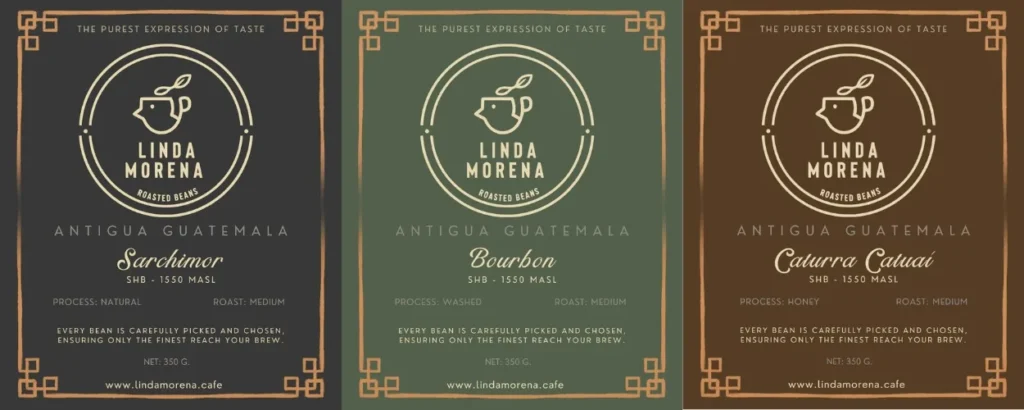
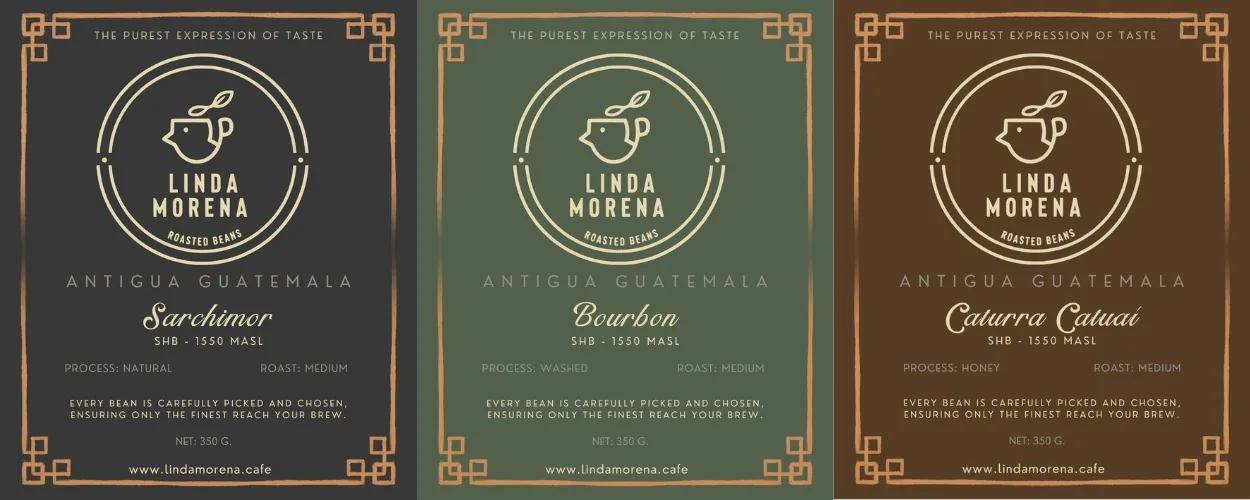
The more specific, the better. “Guatemala” says little. “Antigua Guatemala, farm X” tells you where and who. Our coffee comes from the slopes of the Fuego volcano in Antigua Guatemala.
3. Variety
This is the coffee plant: Bourbon, Caturra, Sarchimor and others. Each has its own character. Our roasted coffee lists its variety on the product page.
4. Process
Washed, natural or another method. It changes the flavor a lot. We explain it in natural vs washed.
5. Altitude
When listed, it gives a hint: coffee from higher ground grows more slowly and tends to be more complex.
6. Tasting notes
These are what the taster perceived: red berries, cocoa, panela. They are not ingredients. They help you guess if you will like it.
7. Cupping score
In specialty coffee, 80 points is the minimum line. An 87 sits in the upper range. See what an 87 actually means.
Warning signs
- No roast date
- Vague words like “gourmet” or “premium” with no data behind them
- No specific origin
- Only “100% arabica” as the argument: it says nothing about quality
Frequently asked questions
What is specialty coffee?
Coffee that scores at least 80 points in a standardized cupping and is handled with care from farm to cup.
Does a high score guarantee I will like it?
No. It signals quality, not your taste. The tasting notes guide you better.