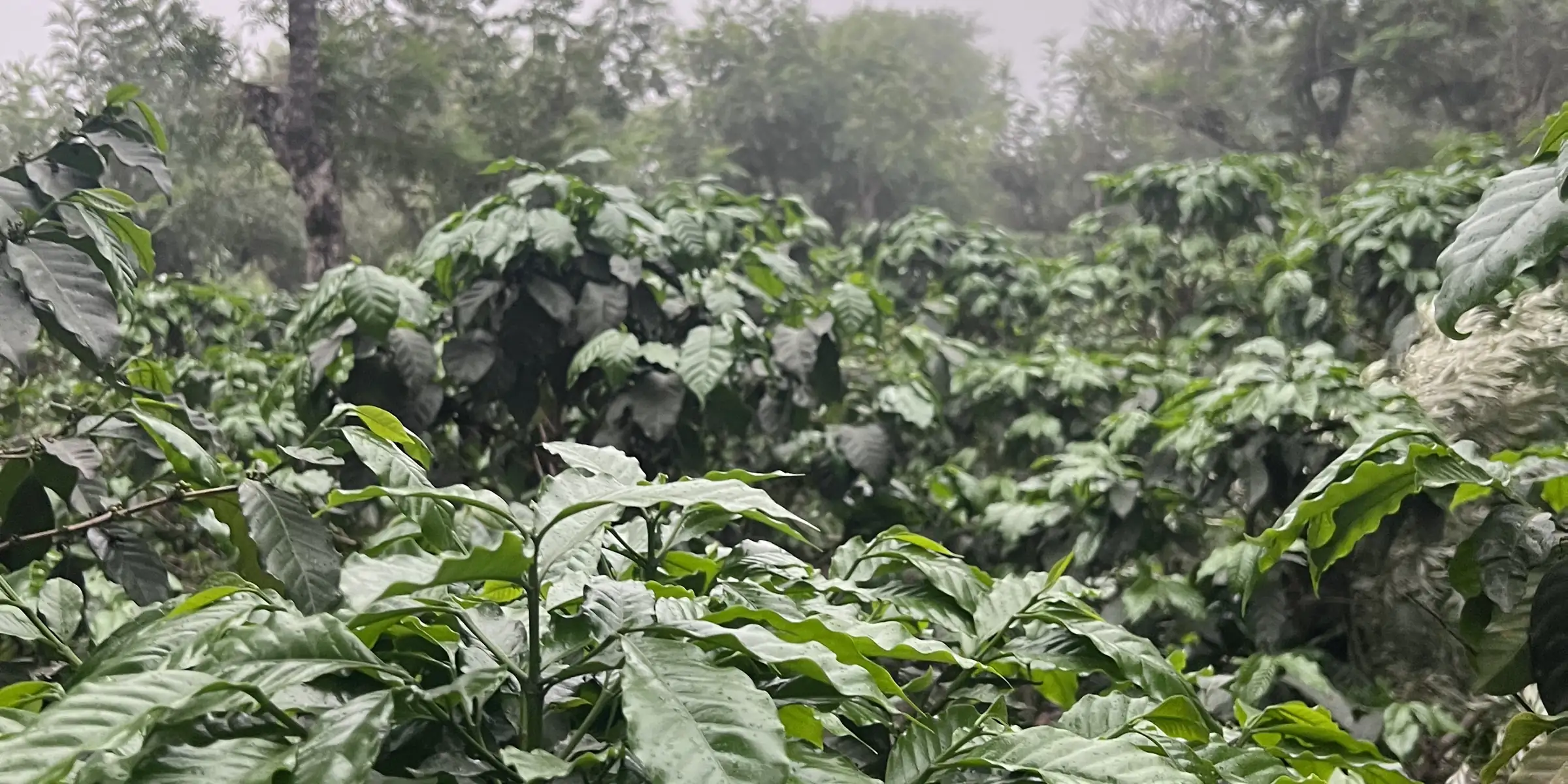
“Shade-grown” shows up on a lot of labels. Here is what it means and how we do it on the farm.
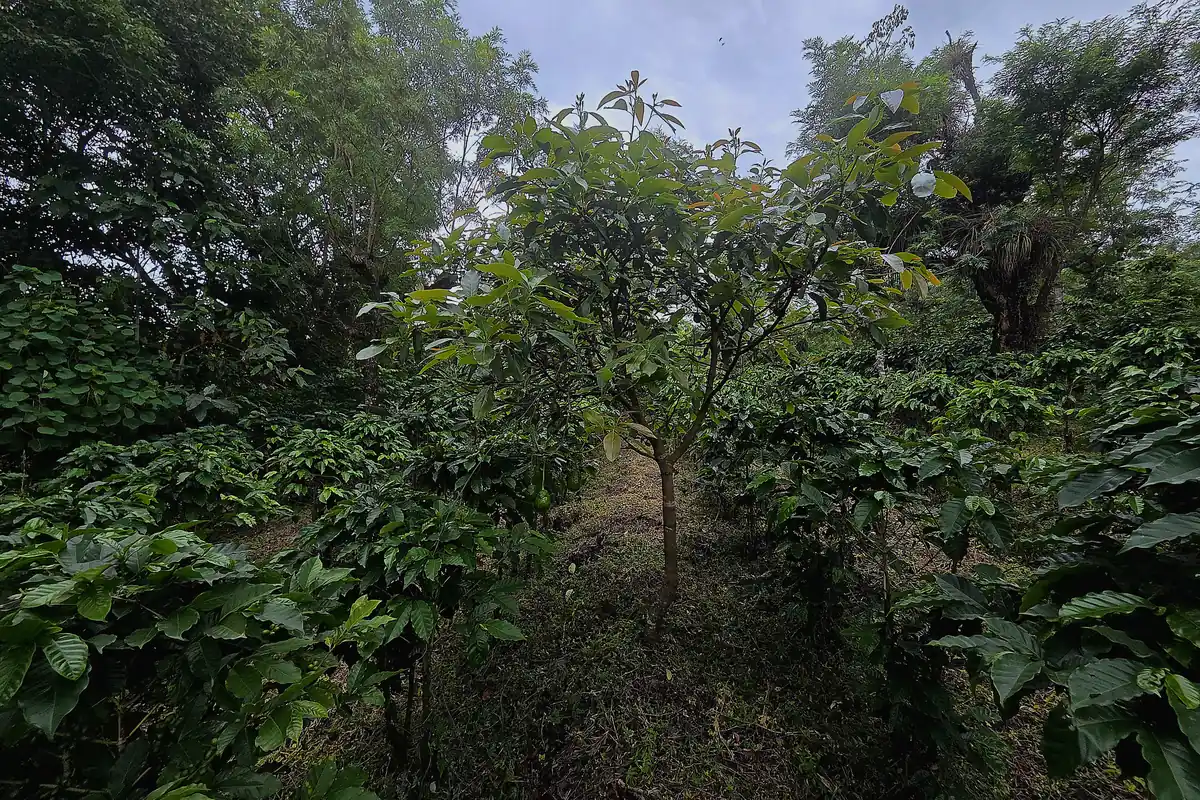
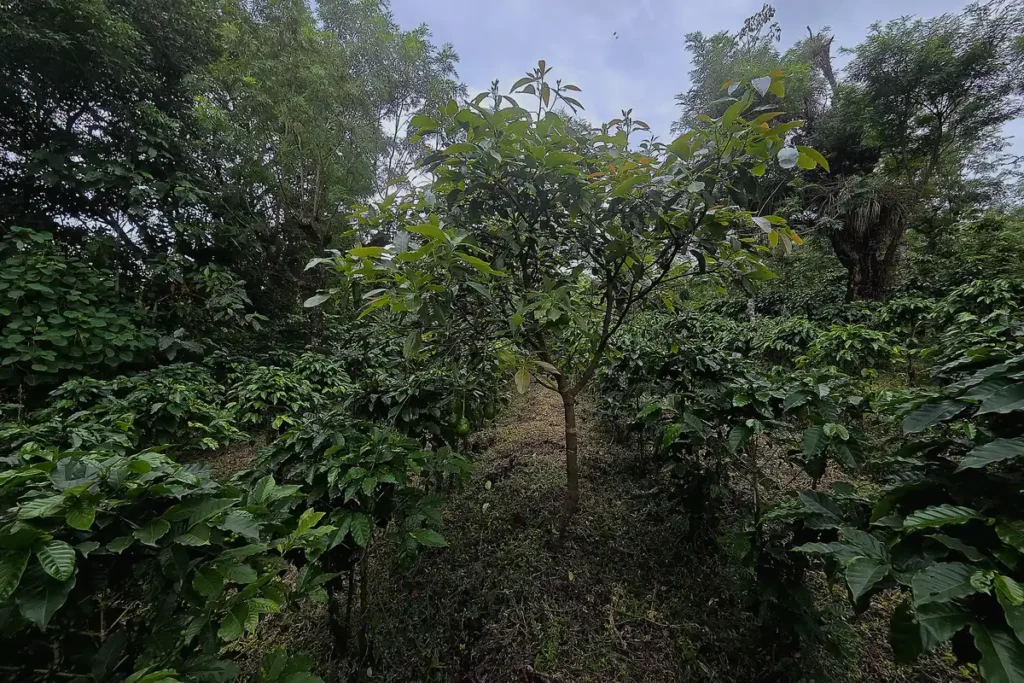
What it is
Shade-grown coffee is planted under taller trees instead of in full sun. The trees filter the light and create an environment close to the forest where the plant originated.
What changes for the land
- Trees give habitat to birds and insects.
- Their leaves cover and feed the soil.
- Shade moderates temperature and helps hold moisture.
What changes in the cup
With less direct sun, the cherry usually ripens more slowly. Many growers and tasters link that to more sweetness and complexity, though the final flavor depends on variety, processing and care at every step.
How we do it at Linda Morena
Our coffee grows under shade, in volcanic soil, on the slopes of the Fuego volcano in Antigua Guatemala. Our rule is that every harvest must leave the land better. In practice:
- When we prepare a new plot, we keep the native trees already growing there. How we did it.
- During a dry season we focused on the soil, not just on water. What we changed.
How to tell if a coffee is shade-grown
Ask the farm or the roaster. A producer who grows under shade usually explains it in detail: which trees, how much shade. If the answer is vague, be cautious.
Frequently asked questions
Is shade-grown the same as organic?
No. They are different things. A coffee can be shade-grown without being organic, and the other way around.
Does it taste better?
Not always. It helps the land and can add sweetness, but flavor depends on many factors.